


Budget Blooms vs. Premium Pretties: My Favorite Flower Swaps

Updated: Feb 11, 2025
Are you worried about your tight floral budget? Not to fret - consider swapping out some premium flower types for more cost-effective options. Whether you're researching for your wedding flowers or planning to DIY centerpieces for a company event, use this guide to help weed out any flowers that may rain on the money-saving parade.
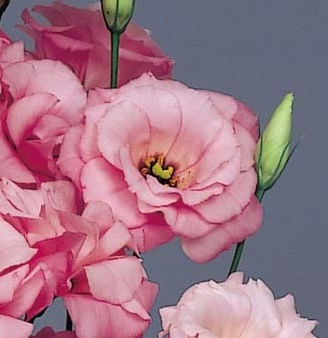
Lisianthus vs. Carnation
Both of these flowers are generally available year-round. They share characteristics of ruffled petals and longevity. Lisianthus has more free-flowing stems (think, a 70's hippie) whereas carnation stems are rather rigid (like an army drill sargent).
Carnations come as a full-size (one bloom) cut or a spray/mini cut (multiple flower heads) and are cost-friendly both ways. Not to mention the endless color varieties you can find! The Lisianthus flower has a more limited color library in comparison.
To make the pair even more strikingly similar, pinch the center layers of a carnation and pull them out with a nice clockwise twist. Pretty hard to tell apart now, huh?

Dahlia vs. Disbud Mum
Dahlias make a simply gorgeous focal addition to a floral arrangement. With their premium price tag also comes a bit of a fussy life span and petals that bruise far too easily. It also tends to have a Iarger flower head than its skinny stem can hold. Hot take, I know… but I ALSO know I can’t be the only florist who feels this way - someone back me up here! Its Chrysanthemum counterpart tips the scale in its favor by boasting an impressive vase life and durability that gives Dahlias no room to compete.
To me, it's the easy choice as some Dahlias and Disbud Dum varieties look practically identical. Don't you agree?


Delphinium vs. Snapdragon
Both of these line flowers possess a similar lean and sway when placed in an arrangement. Delphinium flowers often grow fairly straight & tall. Be warned - snapdragons on the other hand can get a littleeee wild. Sometimes they come in a little curvy and their stems resemble an unpredictable, windy mountain road. I personally love the character it gives a floral piece!
Place your thumb and pointer finger on either side of a snapdragon bud and squeeze in (like how grandma used to pinch your cheeks)... you have just made your snapdragon sing!
I will say... if you are looking for a BLUE delphinium swap, there's simply nothing like it. Delphinium is one of the few flower types that come naturally in a blue hue (besides Tweedia and Nigella).


Ranunculus vs. Spray Rose
Layers and layers of petals these two flowers share. They both excel in longevity and equally make a great addition to corsages or boutonnieres that lack a water source. One maintains a stiff and rigid stem to hold its blooms and buds up strong, while the other has directional, yet oh-so-fragile stems... and is often more in price.
If you end up choosing ranunculus (they're hard to resist and worth the investment) a wire straight up their hollow stem can remedy their fragile stems in an instant.
Watch some real magic when you chop off the top .5 inch of your spray rose buds in one clean cut and you have yourself an identical twin to the ranunculus.


Oriental Lilies vs. Asiatic Lilies
They both have "lily" in the name, but you will find they are not quite the same! When comparing them side by side, you see their copy and paste petal structure - they both have the same number of them and they grow into the same shape. Oriental Lilies are the visually larger of the two. What you do not see, but rather smell, is their difference in fragrance. Oriental Lilies are known for their potent aroma - it's a love it or hate it kind of thing. Asiatic lilies are far less fragrant, often rid of any smell at all unless you get up close and personal.
Both Oriental and Asiatic Lilies have a pesky pollen that can easily stain clothing. Your florist will go the extra mile to ensure all pollen is removed. However, if you're designing flowers at home make sure to gently remove the pollen off the stamen... and DON'T touch anything. The oil from our hands makes the pollen stick. Pause and grab a pipe cleaner (we all have those right?!) to gently dust off and collect the orange pollen before it stains a thing! I wish bunches of Lilies just came with pipe cleaners - I may advise you buy some before bringing home any of these blooms!


Sweet Pea vs. Stock
Get real close, come closer, and breathe in the smell of these fragrant blooms! No, not now, you've got a screen here, silly! These are two of the most sweet-smelling flowers you can find! Sweet Pea has a limited summertime season, but Stock flower however has a year-round availability. Both are a bit dramatic and start shriveling when out of water too long or when they aren't in their optimal conditions. And they're both equally gorgeous, coming in very similar color varieties. The one big difference here is the cost and in this battle, Stock comes out winning!


Clematis vs. Tulip (Reflexed)
These blooms both scream "spring"! Hear me out... this comparison is a little out there. But I couldn't help but include it! Clematis is a fragile, fragile flower and I was really wanting to find a direct flower to swap it for. I instantly thought of a tulip... but a tulip that has been modified a little bit! Now I can't unsee it! Or just look for the "Purple Dream" variety for a little less work!
Take a tulip that has been out of a cooler for a while (this method works ideally if the tulip is warmed up). Place your thumb at the outer base of a petal & your pointer finger in the same spot on the inner side of the petal. Slowly move your pointer finger up to "pop" the petal outward. What we've just done is called "reflexing" the petals (fun fact: roses are really receptive to this too!). Now, you'll find the resemblance between a Clematis flower and a Tulip uncanny!


Cosmo vs. Daisy
You'll see both cosmos and daisies have a similar cheery yellow center. Opting for a daisy, you lose out on the bouncy character a cosmo has, but you get a durable and budget-friendly flower in return with a daisy!
Are you dreaming of a cosmo alternative, but 10x smaller? Feverfew is an adorable little filler flower that resembles a daisy, only on a super duper tiny scale!


And to conclude...
I wanted to note that there are a few additional flowers that will quickly eat away at your floral budget... peonies, hydrangeas, garden roses, and orchids, just to name a few. They are all lovely on their own and have no true comparisons. I recommend you set your heart on the countless other gorgeous flower types if budgeting is of utmost importance!
I hope you found this both witty and informative. At Pictured Petals, I strive to educate myself about the world of flowers, which then gives me the ability to pass knowledge along to my clients in turn. If you know someone planning a wedding and on the hunt for the perfect flowers to request, would you send this their way? I'd be so grateful!
Pictured Petals is a floral design studio based in Colorado, delivering one-of-a-kind floral designs focused on weddings and specialty events. When I have the chance, I love bringing floral pieces to life for everyday occasions as well. You can check out my work at www.picturedpetals.com or give me a follow over on Instagram @picturedpetals. XO!

KEYWORDS: flower comparison, this vs. that, cut flowers, flower swaps, cut flower swaps, budget friendly flowers, cost-effective flowers, wedding flowers, event flowers, every day flowers, colorado florist, colorado wedding florist, floral education, floral knowledge, save money on wedding flowers


We love how passionate you are about floristry! It’s great that you’re helping brides understand their options and making flowers more accessible. Your swaps are super thoughtful, and they are such a great way to educate both yourself and your clients!